
5 Common Mistakes That Lead to Home Lockouts and How to Avoid Them
Getting locked out of your house is frustrating, stressful, and sometimes scary. It can happen when you are rushing to work, coming home late at night, carrying groceries, walking the dog, or stepping outside for “just one second.” One small mistake with your keys, door lock, smart lock, or spare key plan can quickly turn into a home lockout.
The good news is that most house lockouts are preventable.
A home lockout usually happens because of simple everyday habits: leaving keys inside, relying on one copy, ignoring a sticky deadbolt, using a worn key, hiding a spare key in an unsafe place, or forgetting to maintain a keypad door lock or smart door lock.
This guide explains the 5 common mistakes that lead to home lockouts, how to avoid getting locked out of your house, what to do when locked out of house without a key, and when to call a professional locksmith for safe help.
What Should You Do During a Home Lockout?
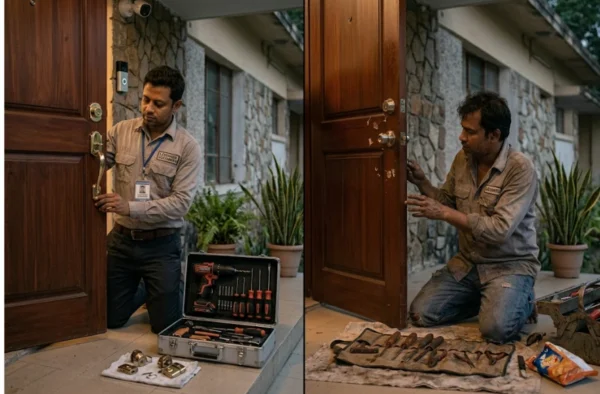
If you are locked out of your house, stay calm, check all safe entry points, contact someone with a spare key, avoid forcing the door, and call a professional locksmith if you cannot get in safely. Do not break a window, damage the front door lock, or try risky lock-picking methods that can make the repair more expensive.
If it is late at night, the weather is bad, a child or pet is inside, or the door lock is damaged, contact emergency locksmith assistance as soon as possible.
What Is a Home Lockout?
A home lockout happens when you cannot enter your house, apartment, condo, or residential property because you do not have access to a working key, code, smart lock app, garage entry, or usable door lock.
A home door lockout can happen because of:
- Lost house keys
- Keys left inside
- A broken key inside the lock
- A jammed deadbolt lock
- A faulty keypad door lock
- A dead smart lock battery
- A damaged door lock cylinder
- A locked garage door
- A sliding door lock problem
- A child accidentally locking the door
- A door closing behind you while the key is inside
A locksmith home lockout service helps you regain entry without unnecessary damage when safe, legal, and possible.
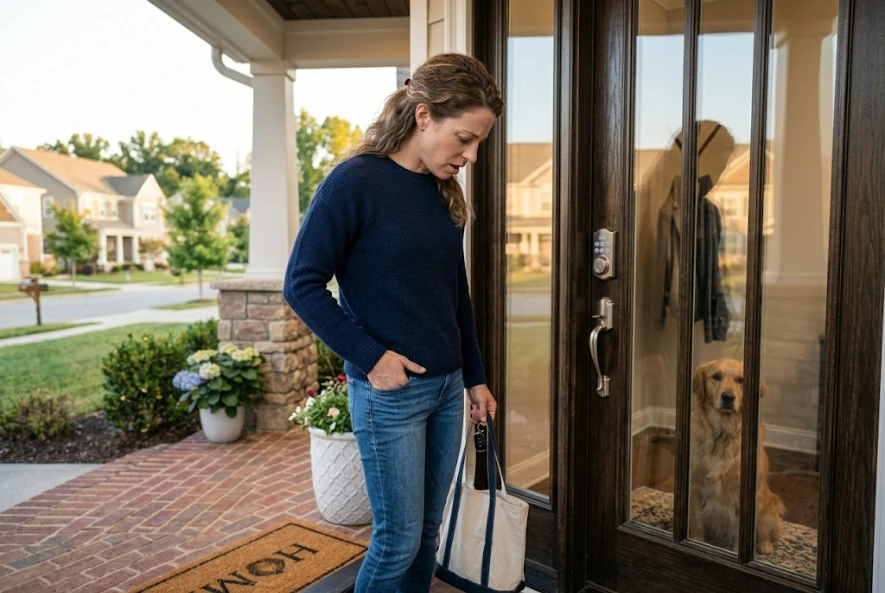
Mistake 1: Leaving the House Without Checking Your Keys
The most common cause of a home lockout is simple: people walk out without their keys.
This often happens when you are in a hurry, distracted, or doing something routine. You step outside to take out the trash, pick up a delivery, grab mail, water plants, or help someone in the driveway. Then the door closes behind you.
If your house door lock automatically locks or your door has a self-locking knob, you may be locked out in seconds.
How to Avoid This Mistake
Create a “keys before door” habit. Before closing the front door, touch your keys, phone, and wallet. Keep your keys in the same location every day. Use a hook, bowl, small tray, or wall organizer near the exit.
You can also:
- Keep keys attached to a daily-use bag
- Use a bright keychain
- Add a Bluetooth key tracker
- Keep a spare key with a trusted person
- Install a keyless entry door lock
- Replace self-locking knobs with safer entry hardware
If you often forget keys, a keypad door lock or keyless deadbolt door lock can help reduce lockout risk.
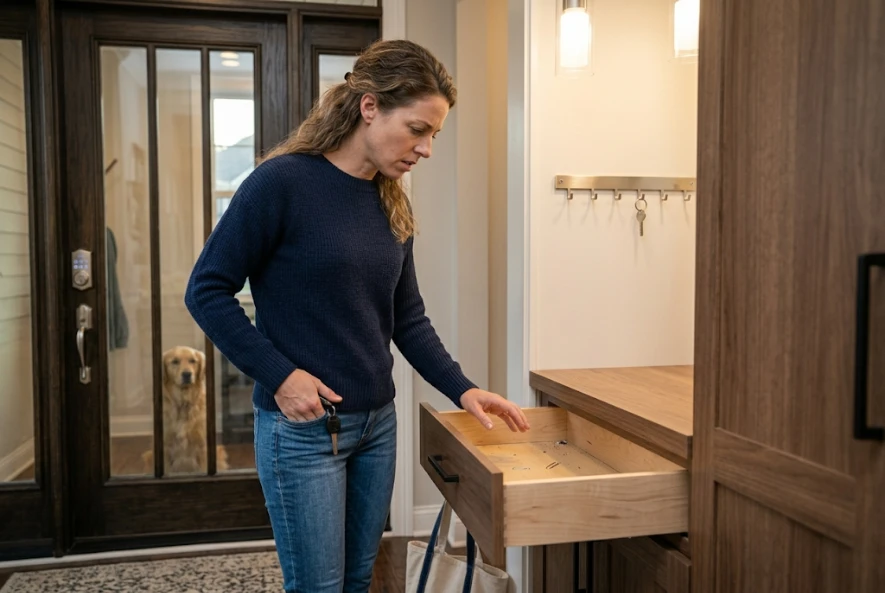
Mistake 2: Relying on Only One House Key
Many homeowners only have one working house key. That is risky.
If that key is lost, stolen, bent, broken, or left inside, you have no backup plan. This is one of the easiest mistakes that cause house lockouts, especially for busy families, renters, older adults, and people who recently moved into a new home.
A single key also becomes a problem if another household member forgets to return it or if the key starts wearing down over time.
Better Backup Options
| Backup Option | Best For | Risk Level | Notes |
| Spare key with trusted neighbor or family member | Homeowners with someone nearby | Low | Safer than hiding a key outside |
| Secure spare key lock box | Homes needing controlled backup access | Medium | Use a high-quality lock box and discreet placement |
| Keypad door lock | Families, guests, and daily convenience | Low to medium | Avoid sharing permanent codes with too many people |
| Smart lock | App access and remote control | Low to medium | Requires battery and app maintenance |
| Multiple key copies | Basic backup | Medium | Track who has each copy |
| Hidden key under mat or flower pot | Not recommended | High | Common hiding spots are easy to find |
The best way to prevent getting locked out is to have more than one safe access method.
For homeowners who need spare key planning, rekeying, or safer lock options, residential locksmith services can help create a better home access plan.
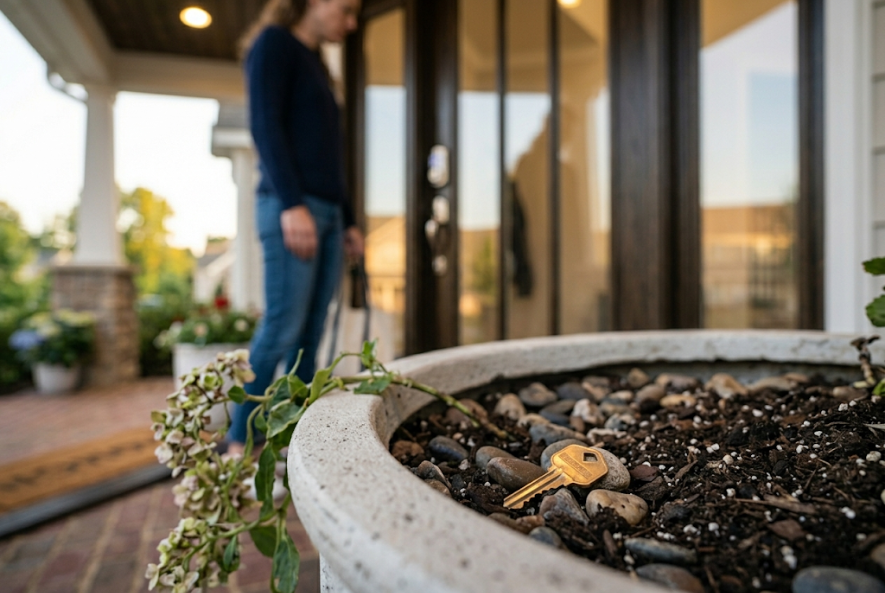
Mistake 3: Hiding a Spare Key in an Obvious Place
Many people hide a spare key outside. The problem is that most hiding spots are not really hidden.
Common risky locations include:
- Under the doormat
- Inside a flower pot
- Above the door frame
- Under a fake rock near the entry
- Inside the mailbox
- Under patio furniture
- Near the garage door
- Behind loose siding
These places may feel convenient, but they can make your home easier to enter. A spare key can prevent a home lockout, but only if it is stored safely.
Should I Hide a Spare Key Outside?
In most cases, you should not hide a spare key in an obvious outdoor spot. It is safer to leave a key with a trusted person, use a quality spare key lock box, or install a keyless entry lock.
A spare house key lock box can be useful, but it should be durable, code-protected, weather-resistant, and placed in a less predictable location. If you use a product like a Master Lock key lock box, change the code periodically and avoid sharing it casually.
Safer Alternatives to Hiding a Spare Key
| Option | Why It Is Safer |
| Trusted neighbor or family member | A real person controls access |
| Lock box in a discreet location | More secure than loose hidden keys |
| Keyless entry deadbolt | Reduces dependence on physical keys |
| Smart door lock with temporary codes | Better for guests, cleaners, and family |
| Lock rekeying service after lost keys | Reduces risk if a key is missing |
| Professional access plan | Helps match locks to your lifestyle |
If you recently lost keys or gave copies to contractors, tenants, cleaners, or former roommates, consider a lock rekeying service instead of only making more copies.
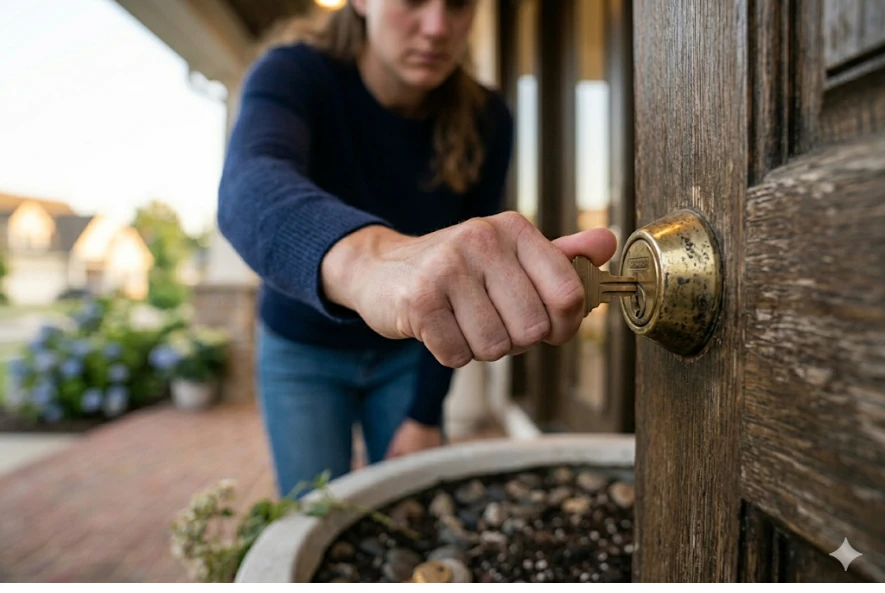
Mistake 4: Ignoring Door Lock Problems Until the Lock Fails
A lockout is not always caused by forgetting keys. Sometimes the lock itself fails.
A sticky deadbolt, loose knob, worn key, damaged cylinder, or misaligned strike plate can eventually stop working. If you have to jiggle the key, pull the door toward you, lift the handle, or force the deadbolt to turn, the lock is already warning you.
These problems often lead to a home door lockout at the worst time.
What Causes a Door Lock to Stop Working?
A door lock may stop working because of worn keys, internal cylinder wear, dirt buildup, weather exposure, loose screws, door frame movement, damaged hardware, poor installation, or a misaligned strike plate.
Wood doors can expand in humidity. Cold weather can stiffen hardware. Older deadbolt locks may become harder to turn over time. Electronic door locks can also fail if batteries are low or if the latch is under pressure.
Warning Signs You Need Door Lock Repair
- Key is hard to insert or remove
- Key turns but the lock does not open
- Deadbolt rubs or sticks
- Lock feels loose
- Key bends inside the lock
- Door must be pushed or lifted to lock
- Smart lock motor sounds strained
- Keypad door lock works inconsistently
- Door lock cylinder spins or feels unstable
Ignoring these signs can lead to broken key extraction, door lock repair, lock cylinder replacement, or full lock replacement.
If your lock is sticking now, schedule professional locksmith services before it becomes an emergency lockout service call.
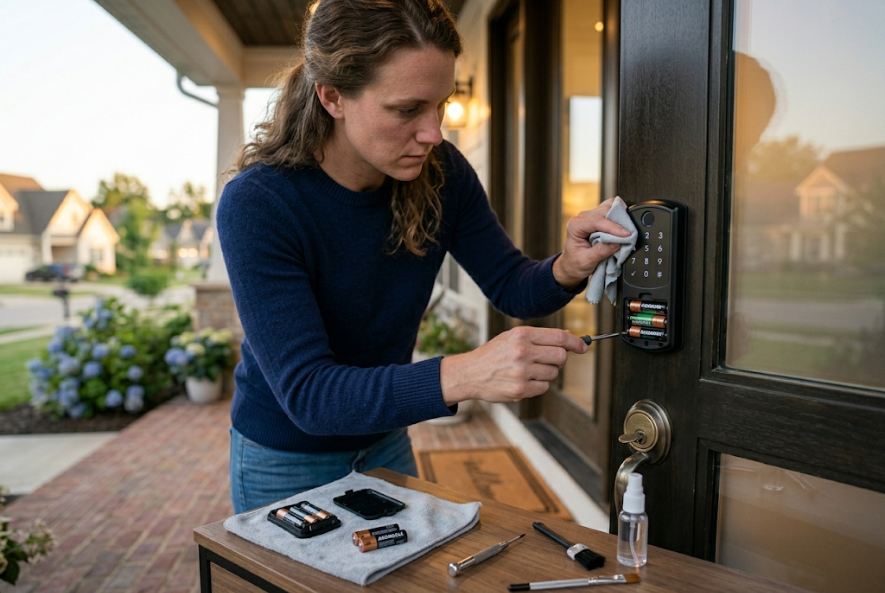
Mistake 5: Depending on Smart Locks Without Maintaining Them
Smart locks can help prevent lockouts, but they still need maintenance.
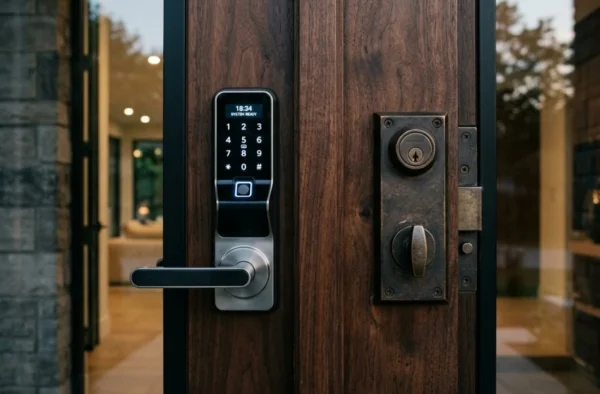
A smart lock, keypad door lock, fingerprint door lock, digital door lock, or electronic door lock can reduce the risk of losing house keys. However, if you ignore battery warnings, forget the access code, lose app access, or fail to keep a backup entry method, you can still get locked out.
This applies to popular options like a Kwikset smart lock, Schlage smart lock, Yale smart lock, Nest Yale lock, deadbolt smart lock, and keyless entry door lock.
How Smart Locks Help Prevent Lockouts
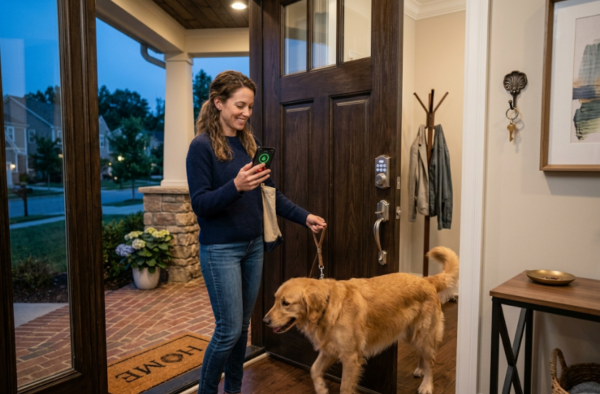
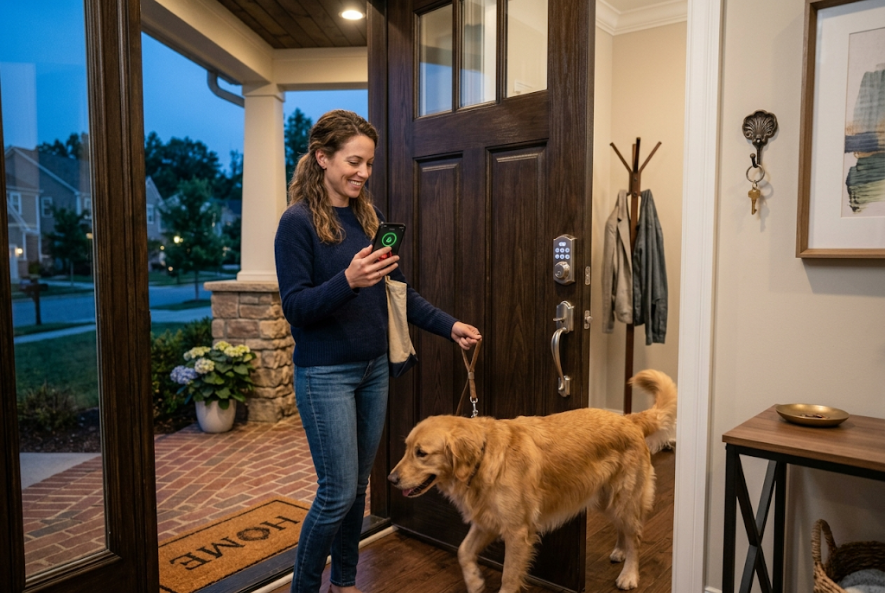
Smart locks help prevent home lockouts by giving you more than one way to unlock the door. Depending on the model, you may be able to use a keypad code, mobile app, fingerprint scanner, voice assistant, temporary guest code, physical key, or remote unlock feature.
Brands such as Schlage, Kwikset, and Yale offer smart door locks and keyless entry options for different homes and door types.
Smart Lock vs Traditional Door Lock
| Feature | Traditional Door Lock | Smart Lock |
| Main access method | Physical key | Code, app, fingerprint, or key |
| Lockout risk | Higher if key is lost | Lower if backup methods are active |
| Battery needed | No | Yes |
| Remote access | No | Available on many models |
| Guest access | Requires key copy | Temporary codes possible |
| Maintenance | Basic hardware care | Batteries, app, firmware, alignment |
| Best for | Simple reliability | Convenience and access control |
A smart lock can be a great lockout prevention tool, but it should be installed correctly. If the deadbolt is misaligned, the motor can strain and fail. If the batteries die, you may need a backup key or emergency power option.
For installation help, ask local locksmith experts which smart lock works best for your door.
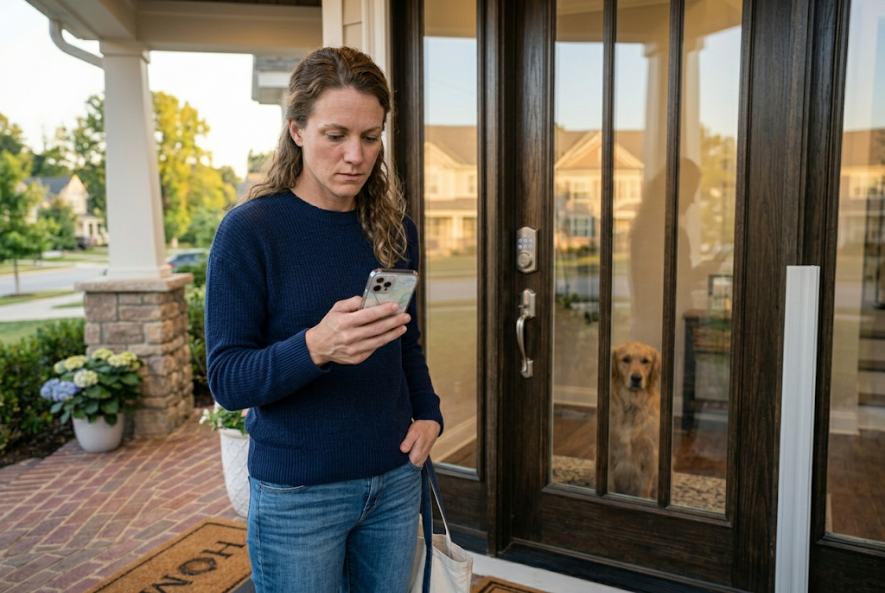
What to Do When Locked Out of Your House
If you are locked out of your house, follow these steps before panicking.
Step 1: Check Safe Entry Points
Check whether another door, garage entry, or back door is unlocked. Do not climb through unsafe windows, damage screens, or risk injury.
Step 2: Call Someone With a Spare Key
Contact a spouse, roommate, family member, neighbor, property manager, or trusted person who may have a spare key.
Step 3: Check Smart Lock or Garage Access
If you have a smart door lock, keypad door lock, garage door lock, or keyless entry system, see whether you can unlock it through the app, keypad, fingerprint reader, or backup code.
Step 4: Avoid Forcing the Door
Do not kick the door, break glass, drill the lock, or use random online lock-picking tricks. These can cause expensive damage and may create safety issues.
Step 5: Call a Residential Locksmith
If you cannot get in safely, contact a home lockout service. A professional locksmith can usually identify the safest entry method and recommend repair if the door lock is damaged.
Locked Out of My House at Night: What Should I Do?
If you are locked out of your house at night, prioritize safety first. Stay in a well-lit area, call a trusted person, avoid waiting alone in an unsafe location, and contact a 24 7 lockout service if you cannot get inside quickly.
A night lockout can feel more stressful because it may involve cold weather, darkness, children, pets, or safety concerns. If you search for “lockout service near me,” “locksmith near me,” “affordable locksmith near me,” or “24 hour locksmith,” choose a legitimate locksmith company with clear service information and professional communication.
You can also review locksmith pricing information before scheduling when the situation is not urgent.
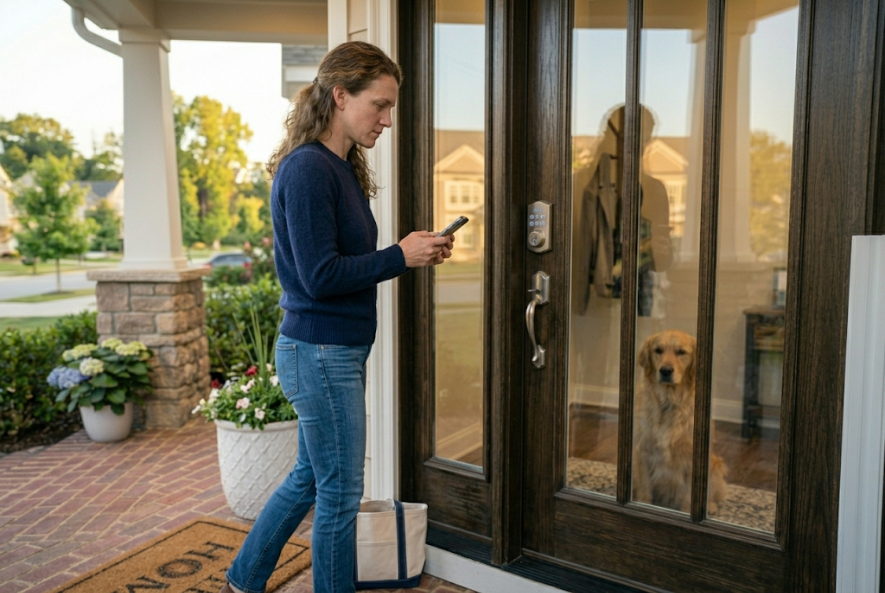
How to Open a Locked Front Door Safely
The safest way to open a locked front door is to use a working key, authorized code, smart lock app, spare key holder, property manager, or professional locksmith.
Do not try to force a deadbolt lock open with a screwdriver, card, knife, or improvised tool. Many modern front door locks, deadbolt door locks, high security deadbolts, and smart lock deadbolts are designed to resist these methods. Trying to force them can damage the door, frame, cylinder, or lock hardware.
If the key is broken inside the lock, call for broken key extraction instead of pushing the broken piece deeper into the cylinder.
Repair, Rekey, or Replace: Which Lockout Solution Do You Need?
| Situation | Best Solution | Why |
| Keys left inside | Lockout service | Entry may be possible without replacing hardware |
| Lost house keys | Lock rekeying service or lock replacement | Prevents old keys from working |
| Broken key in lock | Broken key extraction | Removes key without damaging the cylinder when possible |
| Sticky deadbolt | Door lock repair | Fixes alignment or hardware issue |
| Old or weak lock | Lock replacement | Improves security and reliability |
| New home purchase | Lock rekey service | Ensures old keys no longer work |
| Smart lock battery failure | Battery replacement or backup entry | Restores electronic access |
| Damaged lock after break-in | Lock replacement and security upgrade | Protects the home after forced entry |
A trusted locksmith company can inspect the lock and explain whether repair, rekeying, or replacement makes the most sense.
How to Avoid Broken Keys in Door Locks
Broken keys are a common cause of home lockouts. A key can snap when it is old, bent, thin, poorly copied, or forced into a stiff lock.
To avoid broken keys:
- Replace bent or cracked keys
- Do not force a key that will not turn
- Keep locks clean and properly maintained
- Fix sticky deadbolts early
- Avoid cheap duplicate keys that do not fit well
- Do not use a key as a handle to pull the door
- Call for lock repair if the lock feels rough
If your key breaks, do not keep pushing it. A locksmith may be able to remove it with broken key extraction tools.
Best Lock Types for House Lockout Prevention
The best lock types for house lockout prevention depend on your lifestyle.
A traditional deadbolt lock is simple and reliable, but it depends on physical keys. A keypad door lock allows code entry without a key. A smart lock adds app control and temporary codes. A fingerprint door lock offers fast access without remembering a code. A high security deadbolt improves forced-entry resistance but does not prevent lost-key lockouts by itself.
For many homes, the best setup is a strong deadbolt paired with a reliable keyless entry option and a safe spare key plan.
If you need help choosing between a Schlage door lock, Yale door lock, Kwikset smart lock deadbolt, Wi-Fi deadbolt lock, or keyless deadbolt door lock, experienced locksmith professionals can help you compare options.
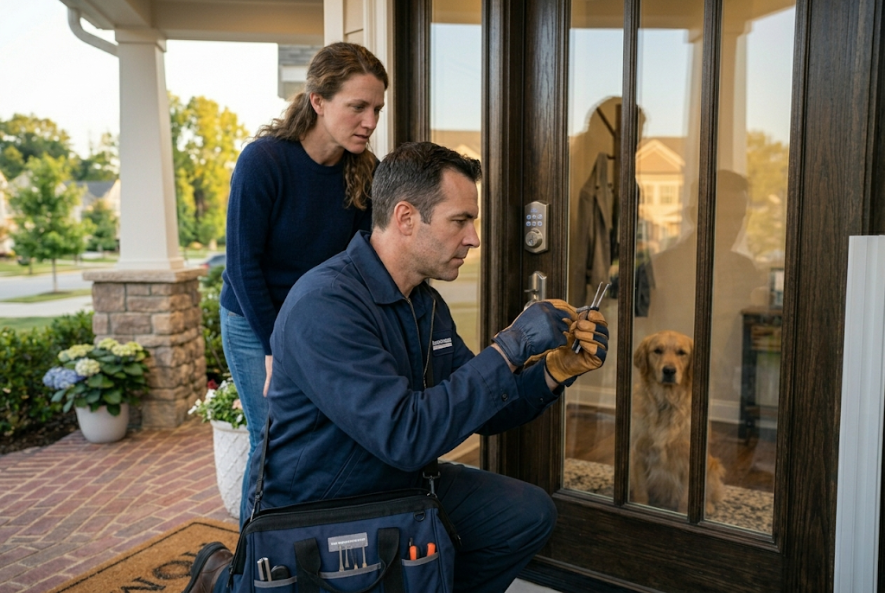
When Should You Call a Professional Locksmith?
Call a professional locksmith when you are locked out, the lock is damaged, the key breaks, the deadbolt will not turn, the smart lock fails, or you do not have a safe way to enter.
You should also call a locksmith for:
- Residential locksmith lockout help
- Door lock repair
- Deadbolt lock installation
- Lock cylinder replacement
- Lock rekeying service
- Sliding door lock replacement
- Smart lock installation
- Keyless entry door lock setup
- Emergency key services
- Commercial locksmith services for business doors
If the lockout involves a business, office, storefront, or employee access issue, commercial locksmith services may be more appropriate than a basic home locksmith service.
Conclusion:
A home lockout can happen to anyone, but most lockouts come from avoidable habits: leaving keys inside, relying on one key, hiding spares in unsafe places, ignoring lock problems, or depending on smart locks without maintaining them.
The best prevention plan is simple. Keep track of your keys, create a safe backup access method, repair sticky locks early, replace worn keys, and consider a keyless entry door lock or smart lock if it fits your home.
If you are already locked out, do not force the door or damage your lock. Contact South Shore Locksmiths for professional home lockout assistance, door lock repair, rekeying, and emergency locksmith service.
FAQs About Home Lockouts
Can smart locks prevent home lockouts?
Yes, smart locks can reduce home lockouts by offering keypad codes, app access, fingerprint entry, guest codes, and backup methods. However, they still need battery maintenance and proper installation.
How can I avoid getting locked out of my house?
You can avoid getting locked out by keeping keys in a consistent place, making safe spare key arrangements, using a keyless entry door lock, maintaining door locks, replacing worn keys, and fixing sticky deadbolts early.
What should I do immediately if I realize I am locked out of my home?
First, remain calm and check all potential entry points, such as back doors, windows, or garage entrances, to ensure they are truly locked. If you are stuck, do not attempt to force entry through a window or lock, as this often causes expensive damage. Instead, contact a professional, licensed locksmith who can provide safe, non-destructive entry.
Should I carry a spare key in my wallet or purse?
While carrying a spare key is a great backup strategy, be mindful of where you keep it. If your wallet or purse is stolen, you have effectively given someone both your identification (which shows your address) and the means to enter your home. A better alternative is to hide a spare key in a secure, non-obvious location on your property or use a smart lock system that eliminates the need for physical keys altogether.